
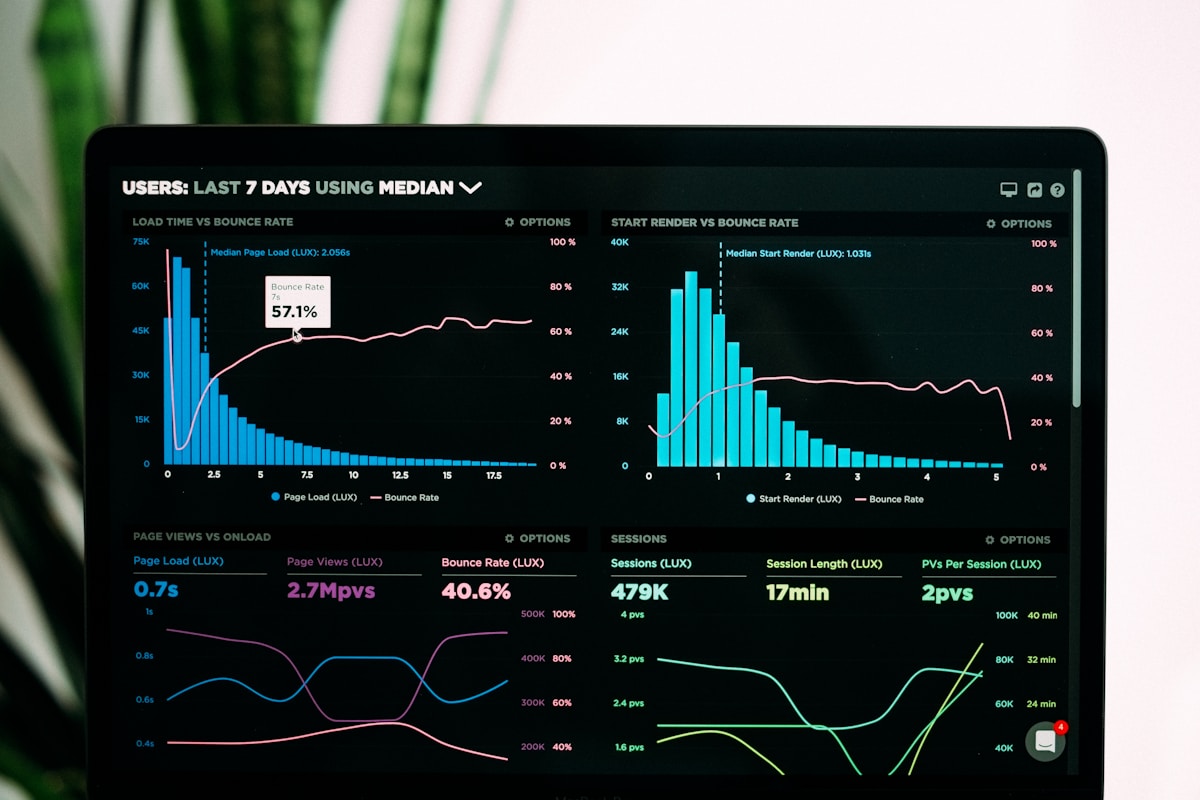
Monitoring Versus Observability: Understanding the Difference
Monitoring tells you when something is wrong. Observability tells you why. Monitoring relies on predefined metrics and thresholds: CPU utilization above eighty percent triggers an alert, error rates above one percent page the on-call engineer. These checks are valuable, but they only detect problems you anticipated in advance.
Observability, by contrast, allows you to ask arbitrary questions about your system’s behavior without deploying new instrumentation. When a user reports that checkout is slow, observability tools let you trace that specific request through every service it touches, examine the latency at each hop, and identify whether the bottleneck is in your payment processor, your database, or a network configuration issue. You did not need to predict this specific failure mode in advance; the observability data was already there.
The Three Pillars of Observability
Metrics
Metrics are numerical measurements collected over time. They answer questions like “how many requests per second is this service handling?” and “what is the 99th percentile response time?” Metrics are lightweight, highly compressible, and well-suited for dashboards and alerting.
Prometheus has become the standard metrics platform in cloud-native environments. It uses a pull-based model where it scrapes metrics endpoints at configured intervals. Applications expose metrics in a standardized format, and Prometheus stores them as time series data. Grafana provides the visualization layer, turning raw metrics into dashboards that reveal trends, anomalies, and correlations.
The RED method provides a practical framework for service-level metrics: Rate (requests per second), Errors (failed requests per second), and Duration (latency distribution). For infrastructure, the USE method is more appropriate: Utilization (percentage of resource capacity used), Saturation (work queued beyond capacity), and Errors (error events). Together, these frameworks ensure you are measuring what matters.
Logs
Logs are timestamped records of discrete events. They provide the richest detail about what happened at a specific moment, but that richness comes with cost. Logs are verbose, expensive to store, and difficult to query at scale without proper infrastructure.
Structured logging transforms free-text log messages into machine-parseable formats, typically JSON. Instead of a log line that reads “User login failed for admin from 192.168.1.5,” structured logging produces a JSON object with discrete fields for event type, username, source IP, timestamp, and result. This structure enables powerful queries, aggregations, and correlations that free-text logs cannot support efficiently.
Centralized log aggregation platforms like the ELK stack (Elasticsearch, Logstash, Kibana), Loki, or cloud-native solutions like AWS CloudWatch Logs and Google Cloud Logging collect logs from all services into a single searchable repository. Without centralization, debugging a distributed transaction requires accessing logs on multiple servers, which is impractical in dynamic container environments where pods may no longer exist by the time you investigate.
Traces
Distributed tracing tracks a single request as it traverses multiple services. Each service adds a span to the trace, recording when the span started, when it ended, and relevant metadata like the HTTP method, response code, and any errors encountered. Assembled together, these spans form a trace that visualizes the complete journey of a request through your system.
OpenTelemetry has emerged as the industry standard for instrumentation, providing vendor-neutral libraries for generating traces, metrics, and logs. Jaeger and Zipkin are popular open-source trace visualization tools, while commercial platforms like Datadog, New Relic, and Honeycomb offer integrated observability with powerful query capabilities.
Building an Effective Observability Strategy
- Define Service Level Objectives, Before building dashboards, define what “good” looks like. SLOs establish measurable targets for availability and performance that align technical metrics with business outcomes.
- Instrument at the boundaries, Prioritize instrumentation at service boundaries, database calls, external API calls, and message queue interactions. These are where latency and errors most commonly originate.
- Correlate across signals, The real power of observability emerges when you can jump from an alert triggered by a metric to the relevant logs and traces for that time window. Correlation IDs that propagate across all three signals make this seamless.
- Manage costs proactively, Observability data volumes grow rapidly. Implement sampling strategies for traces, retention policies for logs, and aggregation rules for metrics to control costs without sacrificing visibility where it matters.
The Cultural Dimension
Observability is as much a cultural practice as a technical one. Teams that embrace observability write code with debuggability in mind, adding meaningful context to log messages and trace spans. They build dashboards not as vanity displays but as operational tools that surface actionable insights. They conduct blameless postmortems that feed back into improved instrumentation. The goal is not to collect more data but to understand your systems deeply enough to operate them with confidence, even when they surprise you.